Atlantic hurricane season runs June 1 – November 30. Work ordered in season waits longer — measuring and quoting ahead of the season is how the calm, competitive quotes happen.

Bradenton · Palmetto · Anna Maria Island

Hurricane shutters, explained straight

Every opening in a Manatee County home — windows, doors, the lanai — is either protected in a storm or it is the weak point. This guide covers the six shutter types that meet Florida code, what each one really costs, and the questions that separate a good quote from a bad one.

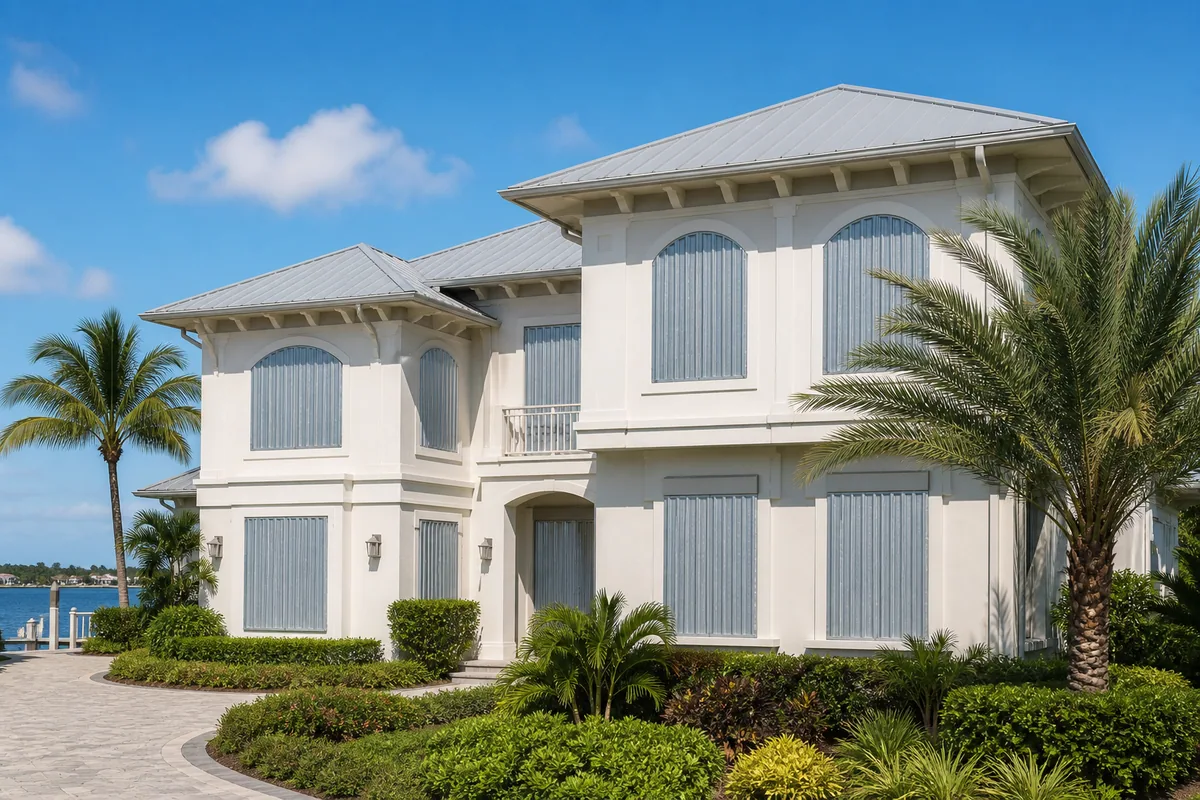
Storm panels, secured — every opening covered before the storm

Jun 1 – Nov 30Atlantic hurricane season — installers book out months ahead of it
Every openingInsurance wind credits are rated on the weakest unprotected opening
FL Product ApprovalThe number to ask for on any shutter sold in Florida
150 mph+Design wind speeds products are tested to along the Manatee coast

Start here

Find your fit in three answers

There is no single “best” shutter — there is the one that matches how a household actually lives. Answer three questions and get a straight recommendation, with the trade-off named.

1 · When a storm is coming, what matters most?
2 · What is getting covered?
3 · Who closes the shutters?

Best fit:

The six types that meet code

Shutter types, without the sales pitch

All six systems below can carry Florida Product Approval when they are the right model and installed to the manufacturer’s instructions. Prices are planning ranges per opening for the Manatee County market — a measured quote is the only real number.

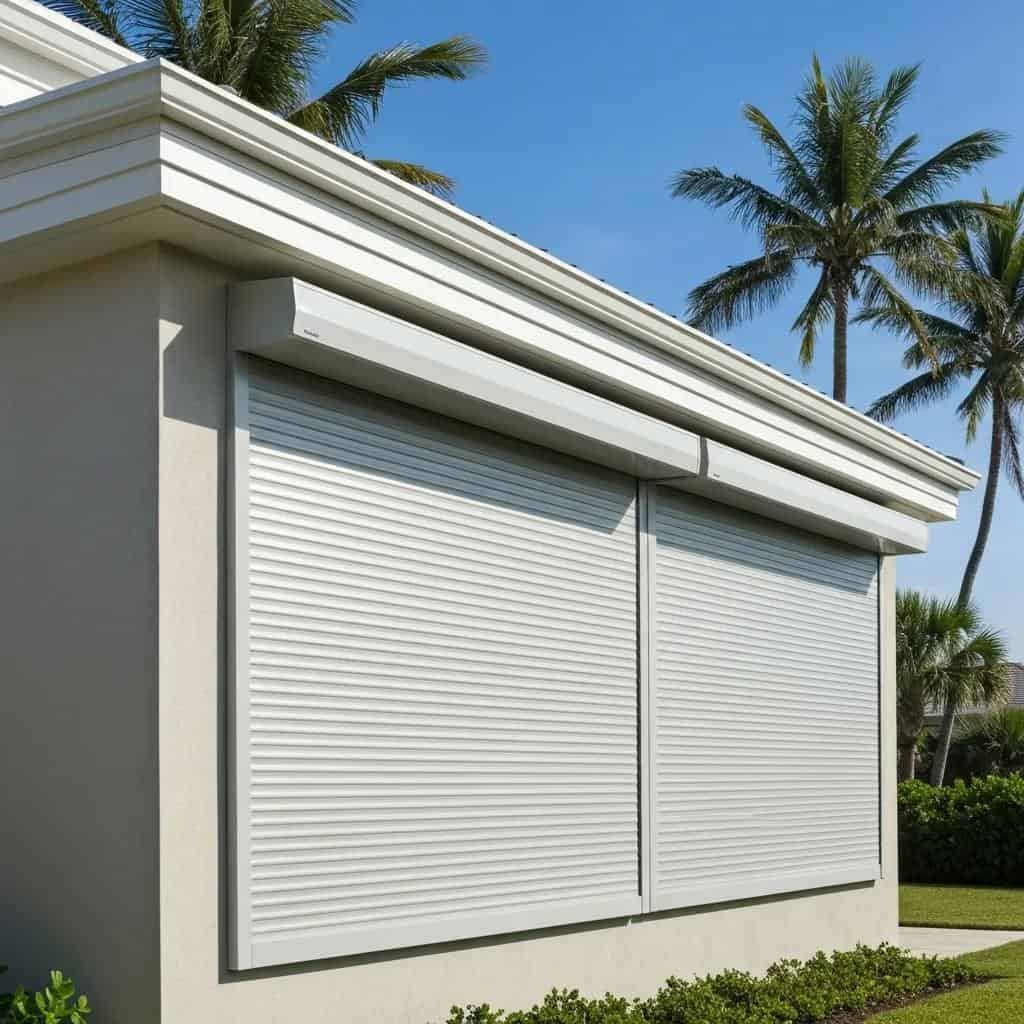
White roll-down hurricane shutters fully lowered over a wide lanai opening, housing boxes mounted above

Roll-Down Shutters

$700–$1,200 per opening, motorized higher

A curtain of interlocking aluminum slats that rolls into a housing above the opening. Manual crank or motor. The fastest full-house close there is — and the most moving parts to maintain in salt air.

Easiest deploymentLanaisSeasonal homes
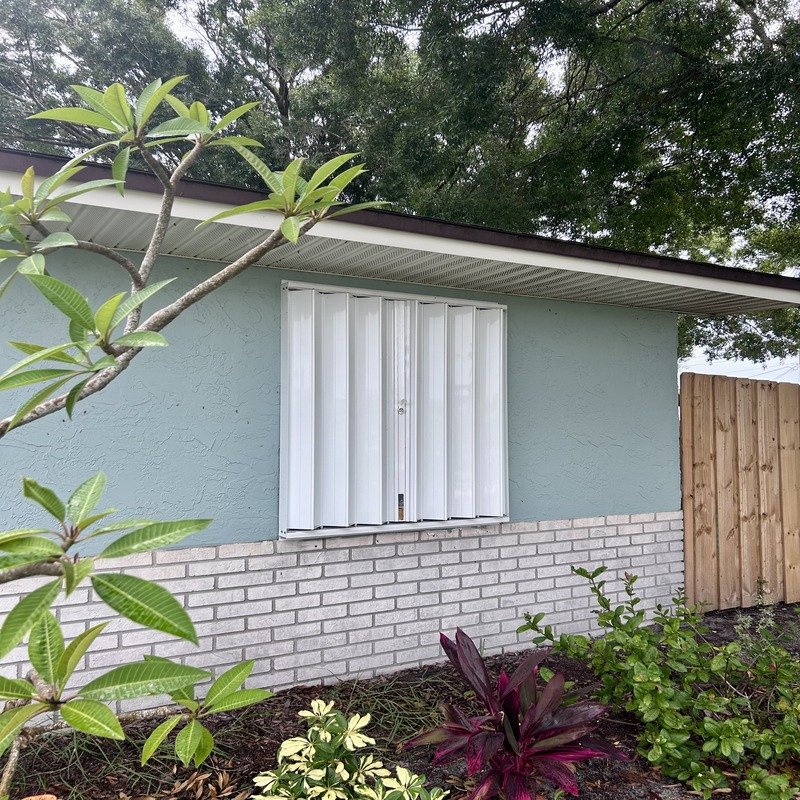
White accordion hurricane shutters closed and locked over a window on a light blue Florida home

Accordion Shutters

$400–$800 per opening

Aluminum blades that fold to the sides like a closet door and lock in the center. Permanently mounted, nothing to store, nothing to haul. The workhorse of Gulf Coast homes — strong value per opening.

Best valueSlidersNo storage needed
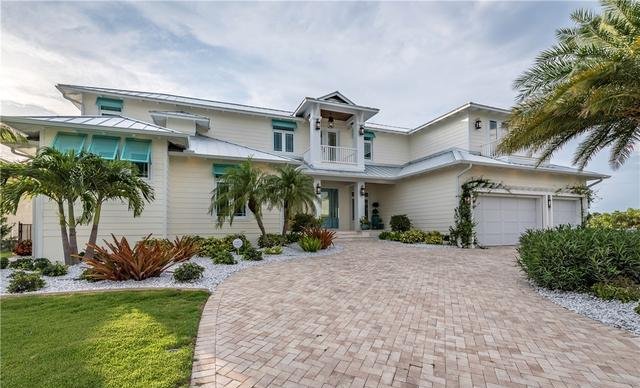
Coastal Florida home with teal Bahama shutters propped open above the windows

Bahama Shutters

$500–$900 per opening

Hinged at the top and propped open like an awning — shade and privacy every day, then lowered and latched when a storm threatens. The only type that improves how a house looks while it waits.

Best lookingShade dailySingle windows

Colonial Shutters

$500–$950 per opening

Two louvered panels hinged at the sides of the window, folded back flat against the wall in fair weather. Classic Florida look, genuinely protective when they are rated models — decorative look-alikes are not.

Traditional lookFront elevations

Storm Panels

$150–$400 per opening

Corrugated aluminum or clear polycarbonate panels that bolt onto pre-installed tracks, then come down and go into storage after the storm. The lowest cost per opening — paid for in labor every single deployment.

Lowest costNeeds storageSlowest to deploy

Hurricane Fabric Screens

$350–$700 per opening

Woven synthetic screens that clip or strap over wide spans and flex under debris impact instead of fighting it. Light enough for one person to hang, rolls up small, and the standard answer for oversized lanai openings.

Wide spansLight to handleCompact storage

Photo credits: roll-down and accordion installations and coastal homes shown from Florida shutter and real-estate photography via image search. Diagrams are illustrative, not engineering drawings.

Side by side

The honest comparison

Deployment effort is the column most buyers underweight — until the first storm warning, when it becomes the only column that matters.

TypeDeploy effortStorageEveryday effectWatch out for
Roll-downPush-button or crank, minutes for the houseNone — rolls into its housingHousing box visible above openingsMotor & slat maintenance in salt air
AccordionPull, lock, done — minutes per openingNone — folds to the sidesStacked blades visible beside openingsTracks need rinsing; locks need lubricant
BahamaLower the props, latch — fastNoneAdds shade and curb appealOnly suits single windows, not wide spans
ColonialSwing both panels in, latch — fastNoneTraditional shuttered lookDecorative non-rated look-alikes
Storm panelsHaul, lift, bolt — the slowest by farGarage or shed space, labeled by openingNothing visible but tracksSecond-story panels need a ladder and a second person
Fabric screensClip or strap on — moderateRolls up smallMinimal hardware visibleStraps and clips degrade in UV; inspect yearly

Money

What a whole house really costs

A typical Manatee County home has 10–16 openings. Multiplying the per-opening ranges above gives the honest planning picture — most whole-house projects land somewhere between $4,000 and $11,000 depending on type, with motorized roll-downs above that range and storm panels below it.

What drives the number up

  • Wide spans. Lanai and slider openings over 10 feet need heavier systems and more labor.
  • Second-story openings. Ladder and lift work is slower and priced like it.
  • Motors and remotes on roll-downs, plus battery backup for outages.
  • Custom colors on Bahama and colonial shutters to match trim.
  • Old-home surprises — rotted framing or non-standard openings found at install.

What keeps the number honest

  • A line-item quote — every opening listed with its size and product, not one lump sum.
  • The Florida Product Approval number printed on the quote for each product.
  • Permit and inspection fees shown separately, not buried.
  • Deployment shown, not described — the buyer closes every shutter once before final payment.
  • Three quotes on the same spec. Different specs compared side by side prove nothing.

Code & insurance

Why the paperwork is half the product

A shutter that cannot be documented does not earn an insurance credit and may not pass inspection. Two documents do the heavy lifting in Florida.

Florida Building Code

  • Product approval. Shutters sold for Florida homes carry a Florida Product Approval number (or Miami-Dade NOA) showing they passed impact and pressure testing.
  • Permits. Manatee County and its cities generally require a permit for permanent shutter installation; the installer normally pulls it.
  • Installation instructions rule. A rated shutter installed off-spec is an unrated shutter. Anchoring pattern and substrate matter.
  • HOA and condo rules. Many Manatee communities regulate shutter color, style, and how long panels may stay up after a storm.

Wind mitigation credits

  • The inspection. A licensed inspector files a Uniform Mitigation Verification form documenting opening protection, roof, and connections.
  • All openings or partial credit. Carriers rate opening protection on the weakest opening — one unprotected window or door can cut the credit sharply.
  • The size of the credit varies by carrier, policy, and the home’s other features. Treat any exact percentage promised before an inspection as a sales line, not a fact.
  • Keep the file. Product approvals, permit sign-off, and photos of every protected opening belong in the insurance folder.

The plywood question

Plywood is better than bare glass and worse than everything on this page: it earns no wind-mitigation credit, it goes up slowly under stress, and lumber stored for years warps and loses fasteners. As an emergency backup for one broken panel it makes sense. As the plan, it is the most expensive option on the list the first time it fails.

The buying process

How a good purchase goes

Measure everything

Every window, door, and lanai span measured and listed. Second-story and wide spans flagged early — they decide the budget.

Match type to opening

Most houses end up mixed: Bahama or colonial on the front, accordion on sliders, fabric or roll-down on the lanai. One type everywhere is rarely the right answer.

Compare on one spec

Same openings, same products, same permit handling — in writing, with product approval numbers. Lump-sum verbal quotes cannot be compared and should not be signed.

Close them yourself

Before final payment, the buyer deploys every shutter personally. Anything stiff, misaligned, or confusing gets fixed while the crew and the leverage are both still there.

Take it to the quotes

Quote worksheet

Fill this in once, then hand the same sheet to every installer who quotes the house. Identical specs are what make three quotes worth getting. The sheet stays on this page — copy it when it looks right.

8
1
1

Ask each installer to quote this exact spec, list a Florida Product Approval number per product, show permit fees separately, and confirm the buyer deploys every shutter before final payment.

Every season

The pre-season check that prevents the panic

Shutters fail from neglect more often than from wind. This check, done in spring before the season opens, is the whole maintenance program for most systems — and done on a calm spring weekend, it is simple, unhurried work instead of a scramble with a storm on the radar.

  • Deploy every shutter fully — tracks cleared, blades moving freely, locks engaging.
  • Rinse tracks and slats with fresh water; salt buildup is the top cause of stiff accordions and roll-downs on the coast.
  • Lubricate locks and tracks with a silicone spray — never grease, which collects grit.
  • Test roll-down motors and cranks; check the battery backup if one is fitted.
  • Count and label storm panels by opening; replace missing wing nuts and bolts now, not during a watch.
  • Inspect fabric screens for UV damage and frayed straps; confirm every clip is present.
  • Photograph every closed opening and file the photos with the wind-mitigation paperwork.

Coverage area

Manatee County, river to Gulf

Exposure changes by neighborhood — a home on the Anna Maria Island Gulf side faces different wind and salt conditions than one east of I-75 in Parrish — but the code, the products, and the buying process on this page apply across the county. It is a beautiful stretch of coast, which is exactly why it is worth protecting properly.

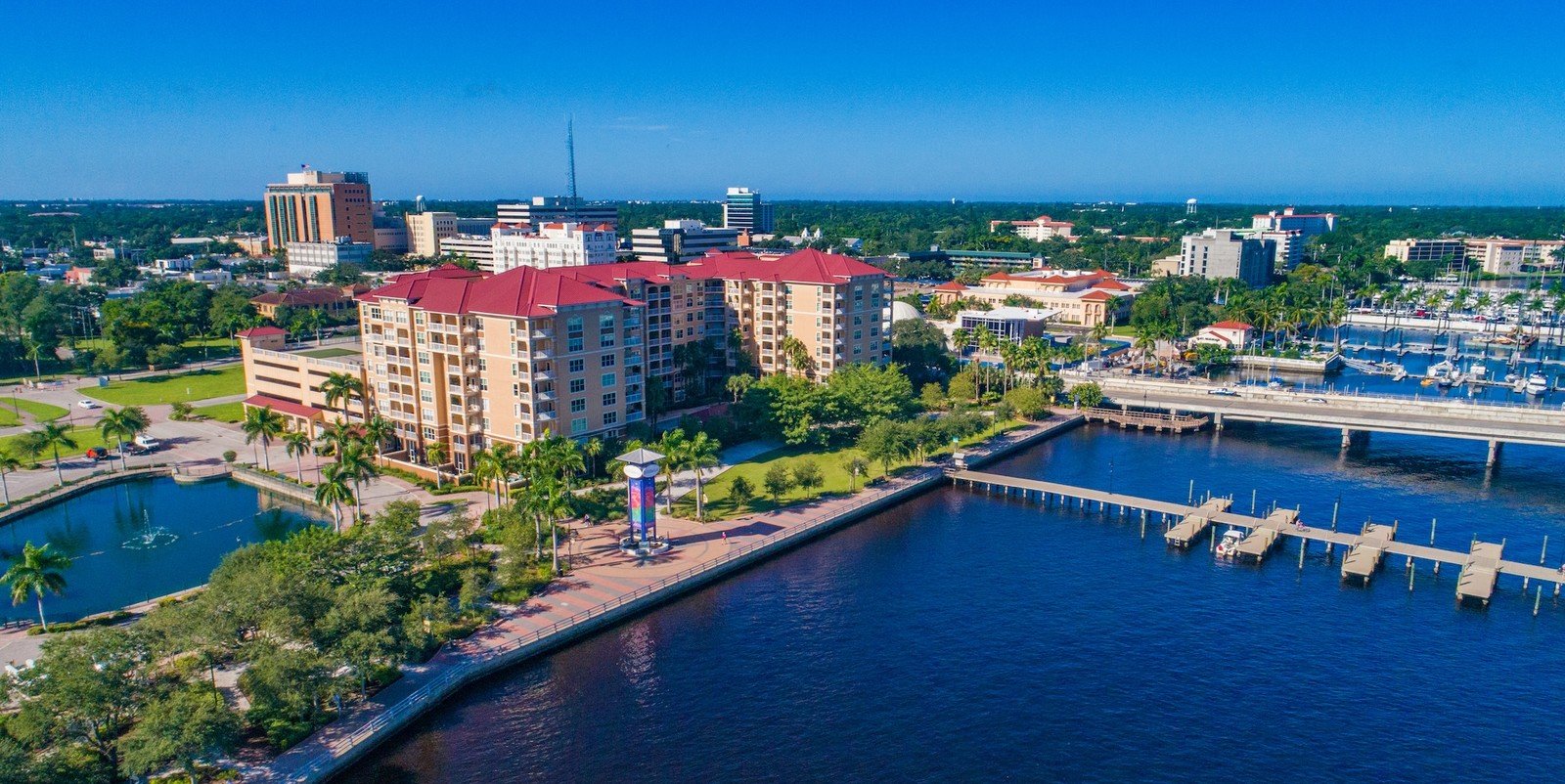
Aerial view of downtown Bradenton and the Bradenton Riverwalk along the Manatee River, with the marina and day docks in the foreground
The Bradenton Riverwalk on the Manatee River, downtown Bradenton — the river end of the county this guide covers, out to the Gulf at Anna Maria Island. Photo: Bradenton Gulf Islands.
BradentonPalmettoAnna MariaHolmes BeachBradenton BeachCortezLakewood RanchEllentonParrishLongboat KeyBayshore GardensPalma Sola

Straight answers

Questions every buyer asks

Are shutters required by law in Manatee County?

New construction and major window replacements must meet Florida Building Code impact requirements — by impact glass or by approved shutters. Existing homes are generally not forced to retrofit, but insurers increasingly price unprotected openings as the risk they are, and some carriers decline coastal homes with no opening protection at all.

Shutters or impact windows — which is the better buy?

Impact windows protect 24/7 with nothing to deploy and add security and noise benefits, at roughly two to three times the cost of shutters for the same opening. Shutters protect the glass the home already has for far less money. Many Manatee homes mix them: impact glass on the hard-to-reach second story, shutters everywhere else.

How long do hurricane shutters last?

Aluminum accordion, roll-down, Bahama, and colonial systems routinely serve for decades on the Gulf Coast when tracks are rinsed and locks lubricated — salt corrosion, not storms, is what ends them. Fabric screens have the shortest service life and should be inspected yearly for UV wear.

Can one person close a whole house?

With roll-downs, accordions, Bahamas, or colonials — yes, that is the point of permanently mounted systems. With storm panels, second-story openings realistically take two people and a ladder, which is exactly the situation the finder above steers solo deployers away from.

When is the worst time to buy?

After a named storm enters the Gulf. Demand spikes, schedules stretch, and negotiating power disappears. Late fall through early spring — after season, before the next one — is when installers have open calendars and quotes get competitive.

Do shutters help with anything besides hurricanes?

Yes. Closed shutters are a real burglary deterrent on empty seasonal homes, Bahama shutters cut cooling load with daily shade, and roll-downs noticeably quiet a lanai. None of that justifies the purchase alone — storm protection does — but it is genuine secondary value.

Call (941) 962-3121 Get a quote